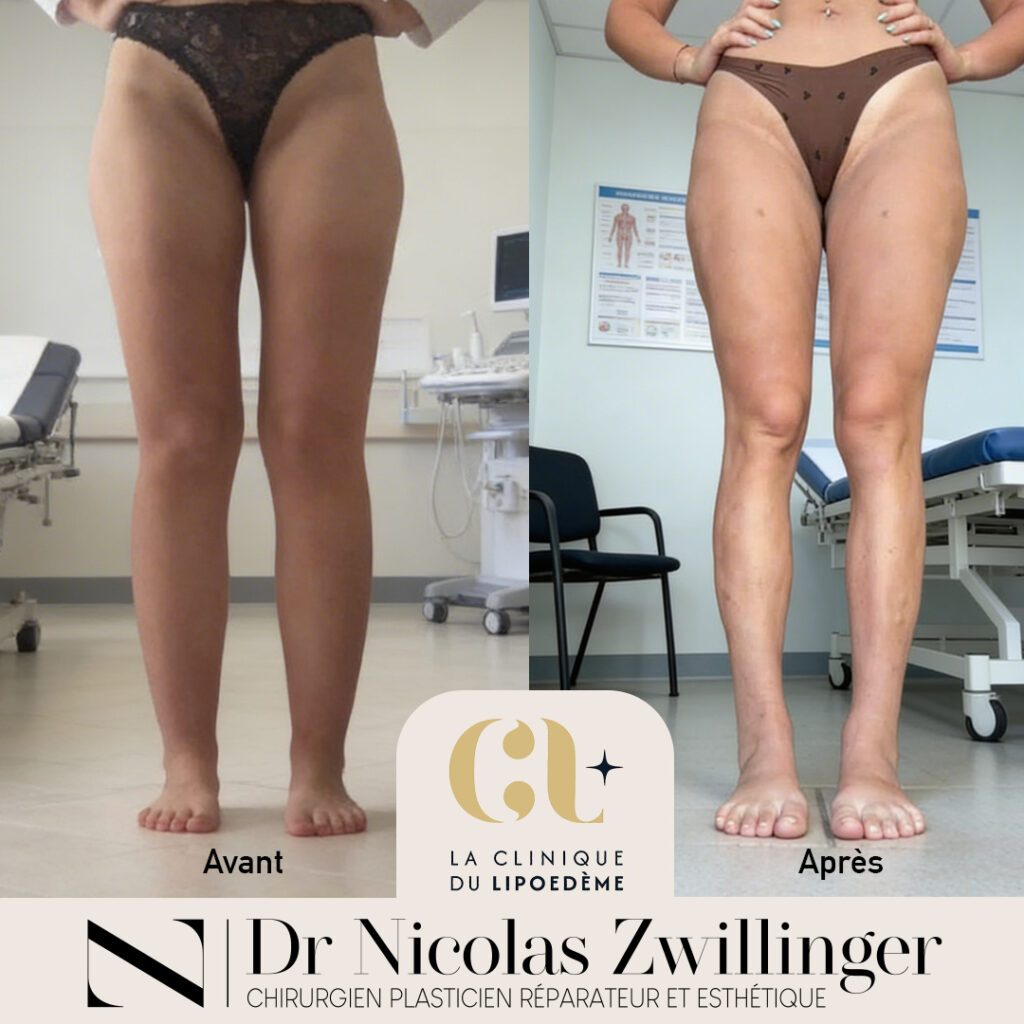
Lipoedema
My face is getting slimmer, my waist is getting smaller… but my legs don't seem to be changing.
Many women feel that their efforts are paying off everywhere except in one specific area: their lower body. Despite a balanced diet, regular exercise, or even significant weight loss, their thighs and legs seem to respond much less to weight loss than the rest of their body.
This situation is often a source of frustration, confusion, and sometimes even guilt. However, when it is accompanied by a significant disproportion between the upper and lower body or other suggestive symptoms, it may indicate a condition that is still largely unknown: lipedema.
Fat distribution varies from woman to woman
Every woman has her own unique natural distribution of body fat.
Some people store more fat in the abdomen, while others store it in the hips, buttocks, or thighs. This distribution depends on many factors, including genetic, hormonal, and metabolic factors.
It is therefore perfectly normal for weight loss to never be completely uniform.
On the other hand, when a significant disproportion persists despite significant weight loss, it becomes important to seek a medical explanation.
When the legs respond much less to weight loss
Some women notice a marked decrease in waist circumference, a slimmer face, or a reduction in arm size, while their legs seem to change much more slowly.
This apparent resistance of body fat can make it seem as though all your efforts are in vain. However, it does not necessarily indicate a lack of discipline or motivation.
In some patients, this presentation may be one of the first signs of lipedema.
Lipedema: A Chronic Disease of Adipose Tissue
Lipedema is a chronic condition of the adipose tissue that affects almost exclusively women. It causes an abnormal accumulation of fat, primarily in the hips, thighs, legs, and sometimes the arms.
Unlike normal fatty tissue, the adipose tissue affected by lipedema responds much less to conventional weight-loss measures.
The fat cells involved do, in fact, function in a unique way and appear to respond differently to the hormonal and metabolic mechanisms that occur during weight loss.
That is why a woman may lose several kilograms and see her face and abdomen become slimmer, while noticing that her legs change very little or remain noticeably out of proportion.
This disproportion between the upper and lower body is one of the most common reasons for seeking medical care among patients with lipedema.
Not all swollen legs are caused by lipedema
It is important to remember that not all women with full thighs or legs have lipedema.
A body type known as “gynoid,” characterized by fat being stored primarily in the hips and thighs, is very common and perfectly normal.
The diagnosis of lipedema is therefore never based solely on leg circumference, but rather on a combination of several clinical findings identified during a specialized consultation.
Symptoms that go far beyond leg swelling
Lipedema is not simply a buildup of fat.
Several characteristic signs are frequently observed:
• a sensation of heavy legs or constant tension;
• spontaneous pain or pain caused by pressure;
• hypersensitivity of the fatty tissue;
• bruises that appear easily, sometimes without noticeable trauma;
• progressive discomfort during daily activities and mobility.
These symptoms are still too often mistakenly attributed to venous insufficiency, a circulatory problem, or simply being overweight.
Exercise and diets remain essential… but sometimes have their limits
A balanced diet and regular physical activity remain essential for maintaining overall health, improving physical fitness, and slowing the progression of many risk factors.
For women with lipedema, these measures often yield significant benefits: improved mobility, reduced pain in certain areas, greater comfort in daily life, and overall weight loss.
On the other hand, they may result in only a limited reduction in the size of the areas affected by the disease.
It is precisely this discrepancy between the efforts made and the results seen in the legs that leads many patients to seek medical advice.
When should you consider seeing a specialist?
A specialized assessment becomes relevant when several factors are present:
• a significant disproportion between the upper and lower body;
• legs that change much less than the rest of the body during weight loss;
• unusual pain or tenderness;
• a gradual increase in leg size over the years;
• a tendency to bruise easily;
• a family history that may suggest lipedema.
Early diagnosis generally makes it possible to implement a more appropriate treatment plan and to manage the progression of the disease more effectively.
Schedule an appointment for a medical evaluation
If your legs appear out of proportion with the rest of your body, if they show little improvement despite your efforts, or if they are accompanied by pain or other suggestive symptoms, a consultation with a specialist can help you assess the situation.
During this clinical evaluation, Dr. Nicolas Zwillingerwill conduct a comprehensive examination to carefully assess your symptoms, evaluate the distribution of fatty tissue, and look for the characteristic signs of lipedema.
The goal is to make an accurate diagnosis and provide personalized care tailored to your situation.
Key points to remember
*A disparity that warrants an assessment*
Losing weight primarily from the upper body while the legs change very little may be a suggestive sign of lipedema when there is significant disproportion or other characteristic symptoms.
*These efforts remain essential*
Exercise and a balanced diet remain essential for health and often improve patients' well-being, even if the size of the affected areas may change only slightly.
*Early diagnosis changes the course of treatment*
A specialized consultation allows for an accurate diagnosis, rules out other possible causes, and identifies the most appropriate solutions for each patient.