
Liposuction WAL
Dive into the world of the lipoedema clinic with Dr. Nicolas Zwillinger and his team. to find out all you need to know about this little-known disease.
Liposuction WAL
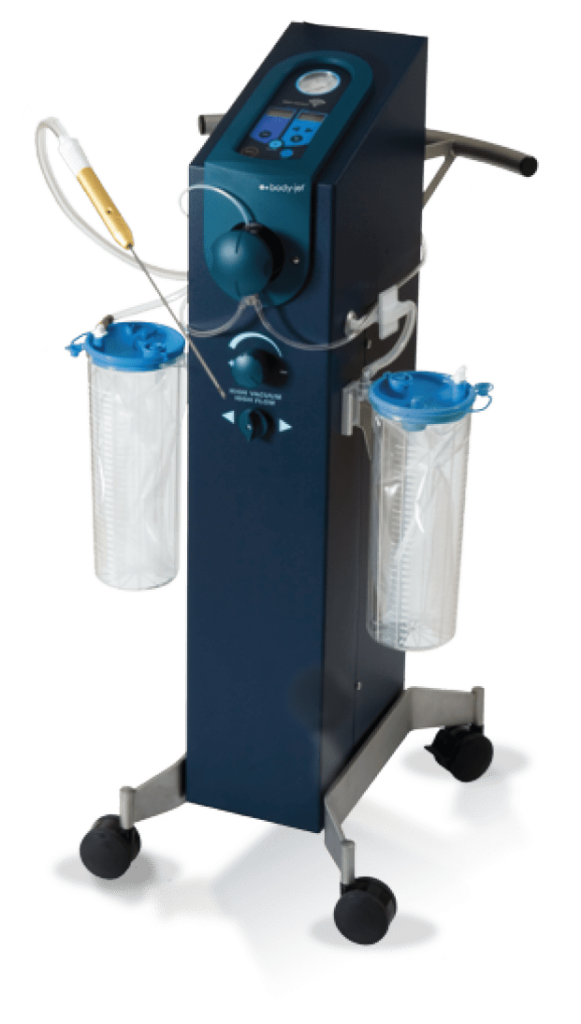
WAL liposuction (Water Assisted Liposuction) is an advanced technique that uses BODY-JET technology to inject water and simultaneously aspirate fat. It is less traumatic for tissues and promotes better recovery.
Used to treat fatty deposits that are resistant to diet and exercise, this method is gentle and reduces the formation of hematomas.
The procedure lasts between 1 and 3 hours, and requires post-operative monitoring with the use of compression garments and lymphatic drainage to optimize results.
Surgical treatment: WAL liposuction
- BODY-JET technology
- Before WAL liposuction surgery
- The course of the intervention
- After WAL liposuction surgery
- The result
WAL liposuction using BODY-JET technology
Liposuction allows localized excess fat to be radically and permanently removed. These localized fat deposits do not generally disappear despite diet or exercise. However, liposuction is not a method of weight loss and its purpose is therefore not to control the patient's weight. Therefore, liposuction is not a treatment for obesity. In practice, WAL liposuction can be performed on many areas of the body: the ankles, calves, thighs, "saddlebags," as well as the hips and arms.
An update on the WAL technique with BODY-JET
The BODY-JET machine allows for simultaneous water injection and suction. This liposuction technique is gentle on lymphatic tissue, reducing trauma, promoting better recovery and minimizing bruising compared to traditional liposuction. Very few cosmetic surgeons use this technology in France. Dr. Nicolas Zwillinger has been using this technique since 2012.
A preoperative assessment is performed in accordance with recommendations. A Doppler ultrasound and, if necessary, a lymphoscintigraphy are performed to assess the extent of the edema and the quality of the venous and lymphatic systems.
A consultation with an anesthesiologist is carried out no later than 48 hours before the procedure, especially in the presence of associated risk factors such as obesity, venous problems, or coagulation disorders.
The procedure is performed under general or spinal anesthesia. The patient must fast (not eat or drink anything) for 6 hours before the procedure, and no aspirin-based medication should be taken for 10 days prior to the day of the operation.
WAL liposuction involves inserting small cannulas with rounded, non-sharp tips and multiple openings through small incisions measuring 3 to 4 millimeters. Next, the BODY-JET injection and fat suction are performed simultaneously.
Since these fat cells are unable to multiply again, there will be no recurrence of excess adipocytes. The amount of fat extracted must be adapted to the quality of the skin, as this influences the final result.
At the end of the procedure, compression bandaging is applied to limit post-operative swelling, usually using a suitable compression garment or compression bandages.
The duration of the procedure varies from 30 minutes to 3 hours, with an average of 2 hours, depending on the volume of fat removed.
It is important to note that recovery time after liposuction is proportional to the amount of fat removed. Bruising and swelling appear in the treated areas during the postoperative period. Pain varies, generally comparable to muscle soreness, and can be alleviated with painkillers. A feeling of fatigue may be experienced in the first few days, especially in cases of significant fat removal. This is mainly related to anemia and can be prevented by preoperative iron treatment (generally recommended). This iron treatment can also be continued after the operation.
Normal activities can be resumed after 15 to 20 days, depending on the extent of the liposuction and the type of professional activity. Bruising usually resolves within 10 to 20 days after the procedure. Wearing an elastic compression garment is recommended for 3 to 6 weeks. Sports activities can be resumed 3 to 4 weeks after the procedure. Finally, it is recommended not to expose the treated areas to the sun or UV rays for at least 3 weeks.
There is no noticeable change in appearance during the first 3 to 4 weeks, as there is initial post-operative swelling of the treated tissue (edema). Following the procedure, lymphatic drainage is recommended to help the edema disappear more quickly.
Many patients feel relief after manual lymphatic drainage sessions performed by a physical therapist. However, this feeling of lightness and refinement is short-lived, hence the need for regular sessions.
Manual lymphatic drainage sessions, performed regularly using the Vodder or Renata methods, provide relief from pain and swelling. They can be performed by a physical therapist, naturopath, or in certain beauty centers. A session should last at least 45 minutes and can last up to 1.5 hours, depending on the areas being treated. Lymphatic drainage promotes better blood and lymphatic circulation.
The results of WAL liposuction begin to be visible approximately one month after the procedure, once the swelling has subsided. It will take approximately 3 to 6 months for the skin to retract completely and adapt to the new silhouette.
The goal of this surgery is to improve the condition of lipedema locally, but it is important to note that some skin irregularities or a "cellulite-like" appearance may persist even after perfectly performed WAL liposuction.
If your expectations are realistic, you should be completely satisfied with the results.
WAL liposuction is a long-lasting solution for people with lipedema, but sometimes you might need more than one procedure. Don't hesitate to talk to a plastic surgeon who does this technique to see if it's right for you.