
Liposuction and Lipedema: Studies, Potential Benefits, and Limitations
Liposuction and Lipedema: Potential Benefits and Limitations.
Chronic leg pain, spontaneous bruising, or hypersensitivity to touch may prompt a visit to the doctor. These symptoms alone are not sufficient to diagnose lipedema; a medical evaluation is necessary to determine their cause.
Liposuction may be considered for certain patients with lipedema, following an individualized assessment. Scientific publications should be interpreted with consideration of their methodology, the patients studied, and the duration of follow-up.
This page provides information about this surgical option. This information cannot be used to predict an individual outcome or to replace a consultation.
Lipoedema: a disease finally understood
Lipedema manifests itself through:
- A symmetrical accumulation of painful fat on the legs (sometimes the arms)
- Spontaneous bruising
- Hypersensitivity to touch
- A feeling of heaviness and mild swelling
Fat associated with lipedema may be resistant to dietary measures and exercise. However, a balanced diet, appropriate physical activity, and managing any excess weight remain important components of the treatment plan.
Since 2018, the WHO has officially recognized lipedema as a chronic disease (code EF02).
Liposuction for lipedema: nothing to do with cosmetic surgery
Therapeutic liposuction may involve various techniques; the choice of technique and associated risks should be discussed with the surgeon:
-
- WAL (Water-Assisted Liposuction)
-
-
- VASER (selective ultrasound)
Items for discussion during the consultation:
-
- Suction settings tailored to the treated areas
-
-
- Postoperative recovery varies: Resuming walking should follow the healthcare team’s instructions
-
- Changes in pain and symptoms assessed during follow-up
At the Lipedema Clinic, the treatment areas and procedures are determined following an individual evaluation. The technique used does not guarantee specific results.
Over 20 years of converging scientific studies
Results measured and reproduced over time:
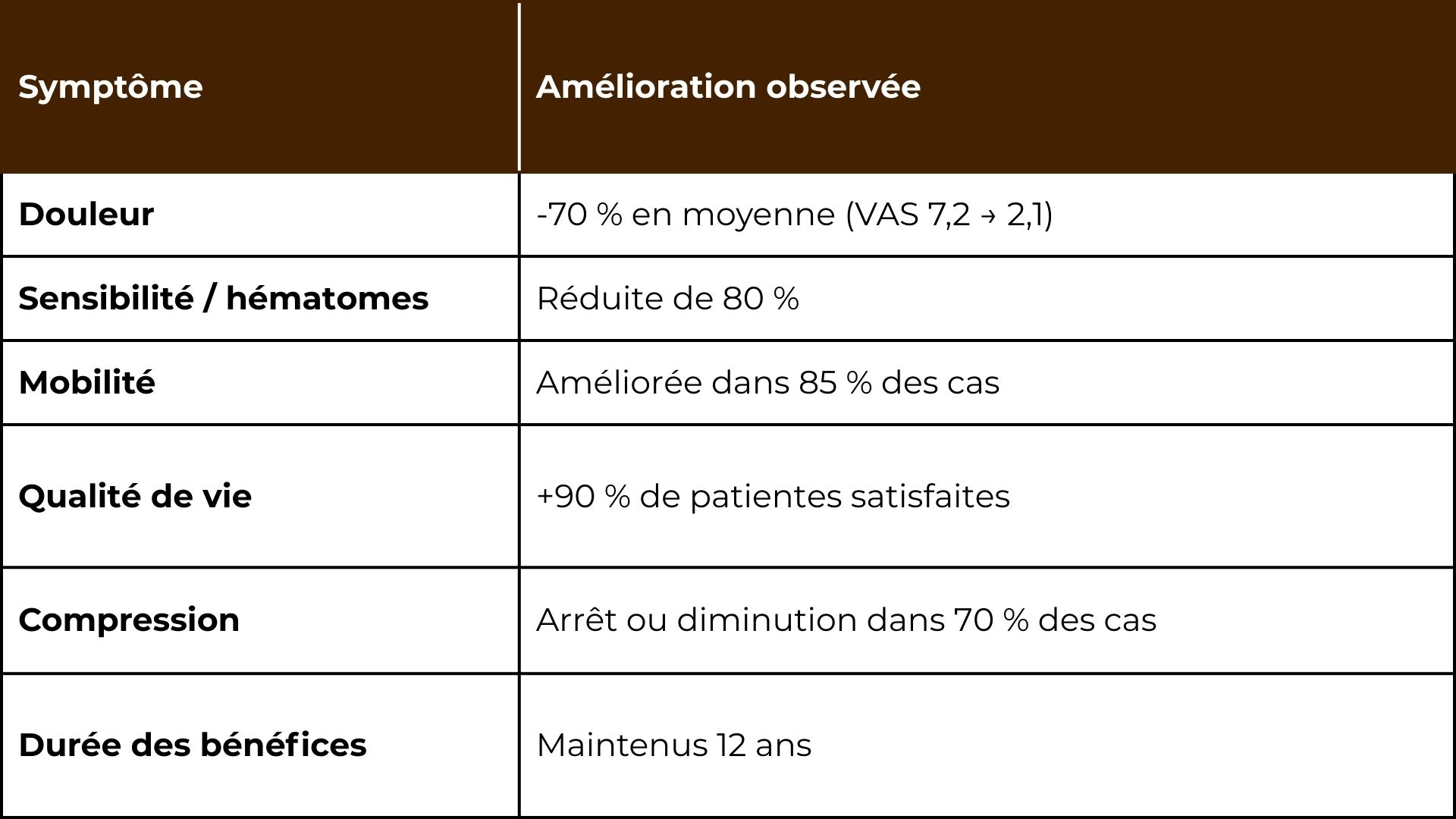
Flagship studies :

Why choose the Lipedema Clinic?
The care pathway is tailored to each patient and may include:
-
- Accurate diagnosis (stages and types)
-
- Preoperative lymphatic assessment
-
- 360° WAL/VASER procedure
-
- 12-month follow-up with a specialized physical therapist
-
- Information on Expected Benefits, Limitations, and Risks
Results vary depending on the clinical situation. Individual results cannot be guaranteed.
In summary: what science says...
- Pain: Improvement may be achieved, though there is no guarantee that the pain will disappear completely.
- Mobility: Progress and recovery time vary from patient to patient.
- Quality of life: This is assessed on an individual basis during follow-up.
- Long-term outcomes: They cannot be predicted based on a single figure; follow-up is still necessary.
- Complications: Any surgical procedure carries risks, including serious complications. The nature of these complications and individual risk factors will be explained during your consultation.
Take back control of your body!
Treatment aims to reduce discomfort and improve quality of life whenever possible. Surgery may be discussed based on symptoms, previous treatments, expectations, and individual risks. It does not guarantee the absence of pain or recovery by a specific date.
Our sources:
Share this article if you know a woman who is suffering in silence. Together, let's break the taboo surrounding lipedema.
Make an appointment today on Doctolib or contact us!