
The Lipedema Clinic answers your questions at
: does liposuction for lipedema remove all the fat?
Liposuction is currently the only effective and long-lasting solution for treating lipedema.
However, one question often comes up during consultations: does liposuction remove all the fat?
The answer is no, and for good reason: the goal is not to eliminate all fat, but to specifically remove diseased fat in a consistent and balanced manner.
Liposuction for lipedema is a precise and targeted procedure that aims to restore a harmonious anatomy while preserving the body's natural structures.
Let's take a look at how this fat is removed, how much is removed, and why a 360° approach is essential for achieving optimal results.
What fat is removed during liposuction for lipedema?
Liposuction for lipedema targets only the fat located under the skin, on the surface of the muscle, in the hypodermis. This fat is responsible for pain, chronic inflammation, and the unbalanced appearance of the limbs.
The technique used is circular liposuction (360°), which involves removing fat evenly all around the affected limb (thighs, knees, legs, arms, forearms, elbows).
This approach allows you to:
✔ Reduce the volume of limbs while respecting their natural shape.
✔ Reveal underlying anatomical structures, such as muscles, joints, and certain tendons, for a more harmonious rendering.
✔ Correct the "stick legs" or "hanging arms" effect by gradually refining the contours of the hips, knees, ankles, wrists, elbows, and shoulders.
However, liposuction does not remove all the fat present in the limb. A thin layer is always preserved to ensure a natural aesthetic result and avoid skin irregularities.
How much fat is removed?
The amount of fat removed depends on several factors:
✔ The initial thickness of the adipose tissue.
✔ The location of the lipedema (upper or lower limbs).
✔ The need to maintain a balanced distribution of fat to avoid skin irregularities.
On average, approximately 80% of diseased subcutaneous fat is removed during liposuction for lipedema. This restores a more fluid silhouette and eliminates most of the painful symptoms.
Currently, there is no standardized scientific method for accurately quantifying the fat extracted from a limb before and after the procedure. Tests such as subcutaneous ultrasound, elastography, or MRI could, in the future, enable a more detailed analysis of the results.
Today, the assessment of the effects of liposuction is based on:
✔ Before and after photo comparisons.
✔ Patient feedback and functional improvement.
It is important to clear up a misunderstanding: some patients with lipedema believe that all the fat in their body is affected by the disease and that liposuction could remove it entirely.
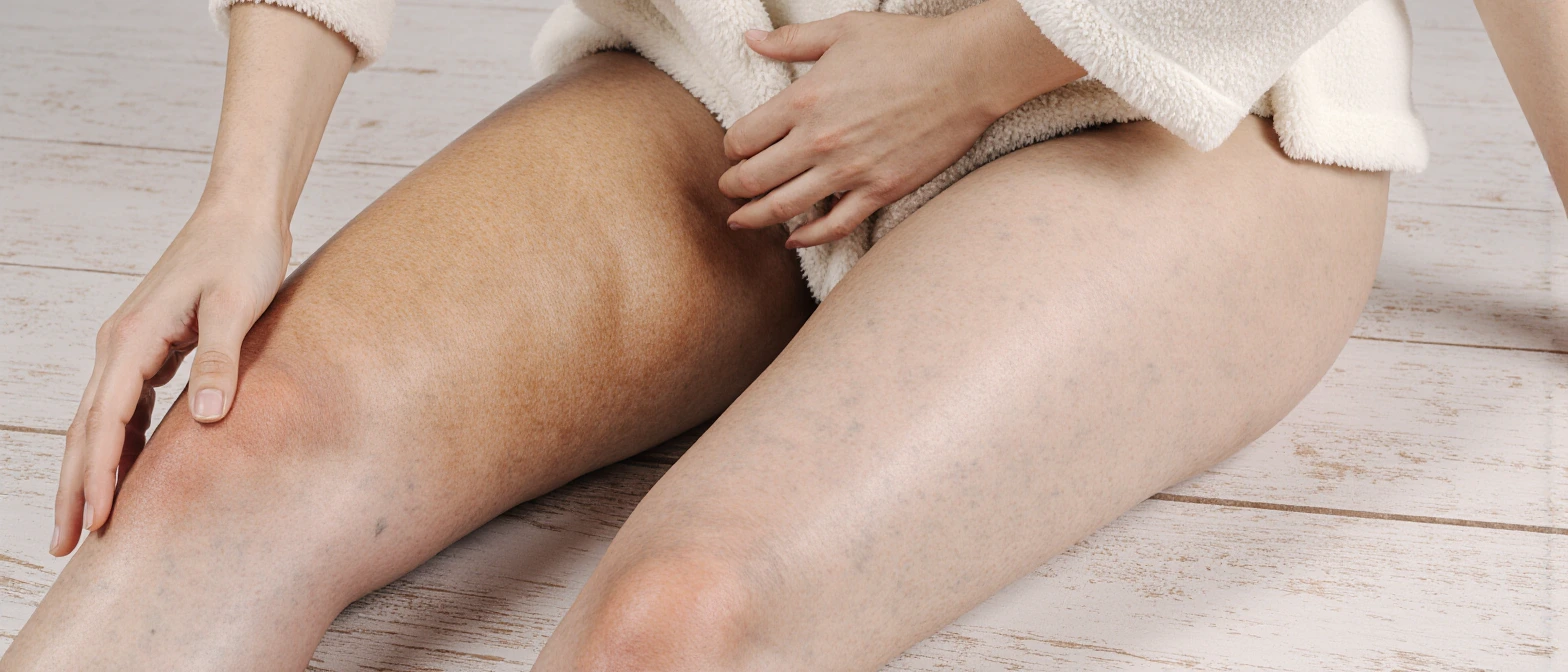
In reality, lipedema mainly affects the lower and upper limbs, with abnormal fat accumulation on the thighs, knees, legs, arms, and forearms. Fat located on the abdomen, back, shoulders, or chest is not systematically linked to lipedema, and its removal does not serve the same therapeutic purpose.
Thus, liposuction does not remove all fat, but only pathological fat, i.e., fat that is functional and bothersome for patients with lipedema.
Long-term sustainable results
Thanks to well-performed liposuction, the reduction in fat volume is stable and long-lasting.
As explained in our previous article, fat cells do not regenerate in adulthood, which means that fat that has been removed cannot grow back.
Patients thus enjoy lasting relief, both functionally and cosmetically.
However, to maintain these results, it is essential to:
✔ Maintain a healthy lifestyle: balanced diet and appropriate physical activity.
✔ Follow post-operative recommendations: wearing compression garments, lymphatic drainage, etc.
✔ Monitor any untreated areas: a second procedure may be considered to complete the treatment.
Targeted and effective liposuction
Liposuction for lipedema does not remove all the fat, but it does eliminate most of the pathological fat responsible for the pain.
and inflammation.
Thanks to a precise and consistent 360° technique, it restores a more harmonious silhouette and improves patients' quality of life.
in a sustainable manner.
If you would like to learn more about this procedure or make an appointment for a specialist consultation, please contact the Lipedema Clinic.
Starting today!