
In conclusion, a facelift may be necessary in certain areas affected by lipedema (thighs or arms), due to poor skin elasticity or significant weight fluctuations. This procedure is considered more "invasive" in some respects, but ultimately does not differ greatly from surgical treatment using WAL liposuction alone.
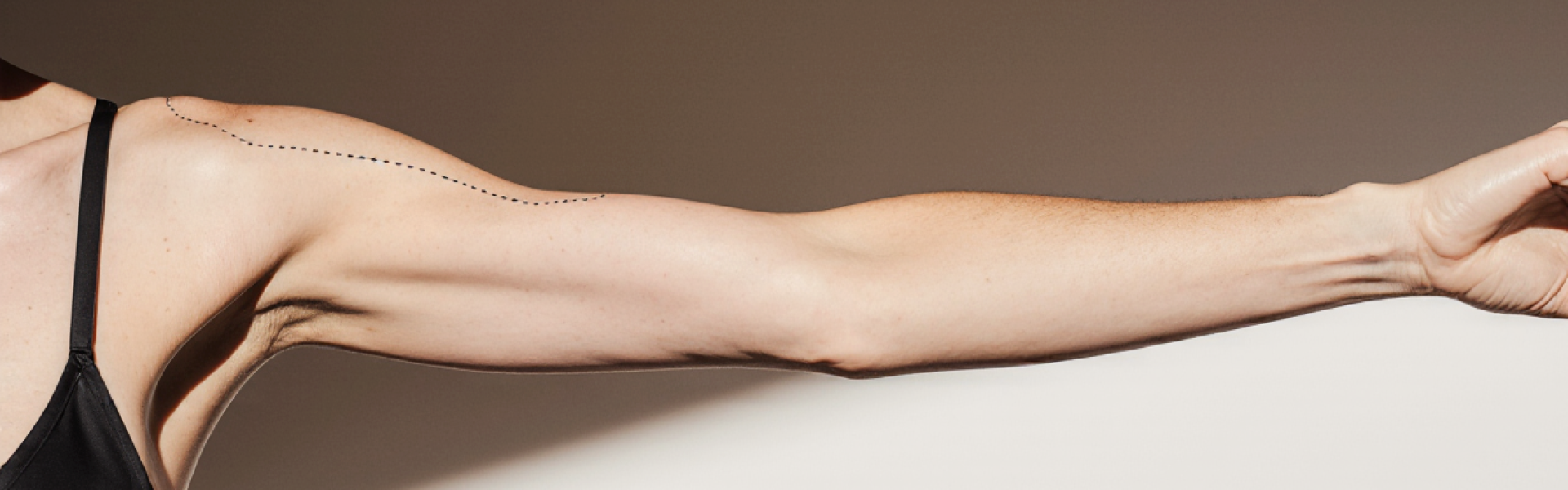
Possibility of combining thigh or arm lifting (
) with WAL liposuction
Some patients with lipedema notice localized skin laxity on their arms and/or thighs and wonder whether the liposuction technique used by Dr. Zwillinger is sufficient or whether it should be combined with a lift.
The skin on the inner thighs and arms is thin and its elastic fibers are fragile.
It therefore deteriorates quickly due to natural aging or significant weight fluctuations, particularly followingbariatric surgery(a sleeve gastrectomy, gastric banding, etc.).
This deterioration in skin quality is often difficult to cope with, and there is therefore significant demand for remedies.
In cases of excess skin associated with lipedema,WAL liposuctionshould be combined with a lifting technique. This will effectively reduce fat infiltration, remove excess skin, and securely suspend the remaining skin in order to effectively tighten it.
What are the similarities between WAL liposuction alone and WAL liposuction combined with a facelift?
Exams:
Preoperative tests (blood tests, Doppler ultrasound, andlymphoscintigraphyin some cases) and postoperative tests (blood tests on day 7 and Doppler ultrasound on day 15) remain the same. It is also recommended that lymphatic drainage be performed on the operated areas, although a minimum of 15 to 20 days should be allowed before the first session so as not to put too much strain on the scars in the case of lower and upper limb lifts.
Postoperative compression:
During arm lift surgery (brachioplasty) combined with surgical treatment of lipedema by liposuction,compression sleevesmust be worn:
- day and night fora minimum of 2 weeks, ideally 4 weeks
- then day or nightfor an additional 2 weeks
During thigh lift surgery (cruroplasty) combined with surgical treatment of lipedema by liposuction, thepost-operative pantymust be worn following the same protocol as for the "arm" area, combined with the wearing of class 3 compression stockings for the first 10 days.
Compressionis an essential part of post-operative care following surgical treatment for lipedema, as it allows the skin to retract properly over the operated areas.
What are the differences between WAL liposuction alone and WAL liposuction combined with a facelift?
During WAL liposuction on the lower limbs, the procedure can be performed under spinal or general anesthesia. If cruroplasty is also performed, the procedure is carried out under general anesthesia.
In fact, the duration of surgery is longer when these two techniques are combined:
- 1.5 to 2 hours on average for WAL liposuction of the lower limbs
- 2.5 to 3 hours on average for WAL liposuction combined with curoplasty
Following the procedure, walking is a little more difficult with cruroplasty. You need to be patient and get up gradually. We advise patients who have undergone surgery to take their time and have people around them for support during the first few days. It is best to plan to stayat the clinic for thefirst night.
The scars left by WAL liposuction are small and barely visible, whereas thigh and arm lifts leave more significant scars.
In the case of brachioplasty, the procedure lasts an average of 1.5 to 2 hours, and like upper limb liposuction alone, it is performed under general anesthesia.
How to care for cruroplasty or brachioplasty scars?
It is important to have post-operative care (dressings) carried out by a nurse once a day for 2 to 3 weeks. We advise patients to shower daily without compression or dressings from the day after the procedure if they feel able to do so. Otherwise, it is possible to wait 48 to 72 hours after the procedure. Once the discharge has stopped, it is important to apply a healing cream (Cicalfate, Cicaplast, etc.) to all scars untilthey arecompletelyhealed, which can take 6 months to 1 year.
During the first 6 months, exposure to the sun should be avoided. The area should be protected by wearing clothing or, at the very least, applying maximum UV protection (to be reapplied every 2 hours).
To reduce surgical scars,Fraxel laser treatment can be used. We recommend consulting the dermatologist at Dr. Nicolas Zwillinger's office to perform a flash test and determine whether this technique is suitable for you.
The first session should ideally take place 2 to 3 weeks after the procedure and be repeated once a month for 3 months. For further information about the Fraxel laser technique
Things to remember...
Facebook
LinkedIn
WhatsApp