
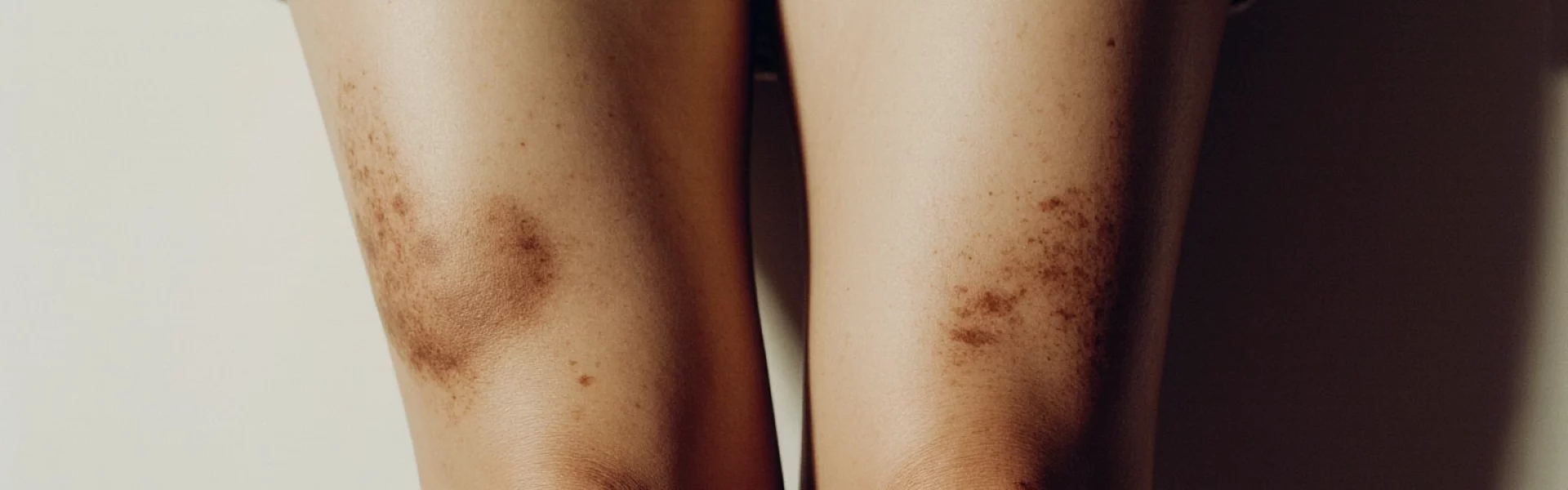
Lipedema: pain and hypersensitivity
Lipedema is a chronic condition that primarily affects women. It involves the accumulation of abnormal fat cells.
The accumulation of fat and water is gradual and symmetrical.It mainly affects the lower limbs, but also the hips, ankles, and, more rarely, the arms.
Pain and hypersensitivity of the limbs to touch
When the skin of the lower limbs is touched or pressed, patients experience pain of varying intensity. The pain intensifies in advanced cases of the disease. The texture of the skin is also affected. It takeson an "orange peel" appearance and loses its suppleness. It thickens until it becomes irregular and bumpy.
Beyond the purely aesthetic aspect,the legs become very painful at the slightest touch or pressure.
at the slightest pinch. Patients with lipedema experience intense pain when they try to massage themselves or have a massage.
The skin may also develop bruises and ecchymoses. Certain types of clothing may become difficult to wear.
Pain and hypersensitivity in the limbs due to lipedema. It can impact the ability to walk, which can lead to a loss of mobility and muscle strength.
Physical pain associated with lipedema
This disease causes pain in the lower limbs. Patients complain ofheaviness in the legs, sometimes accompanied by edema. The pain often occurs at night or after walking a few kilometers. The nodules (dense, compact lumps of fat) put pressure on the joints to the point where, in stages 3 or 4 of the disease, it becomes impossible to walk normally.
Loss of mobility and muscle weakness
In the final stage of lipedema, mobility is severely reduced, along with quality of life. People with stage 3 lipedema lose their independence in terms of movement.Muscle capacity declines. If treatment is not provided, there is a risk of developing lipolymphedema, stage 4 lipedema.
Psychological pain associated with lipedema
In addition to all this physical pain, there is alsoreal psychological suffering. As lipedema is still a little-known condition, women affected by it often find themselves alone with their pain, unaware that they are suffering from a real illness. When the condition appears (either during adolescence or later, sometimes after pregnancy), they feel different, abnormal. They don't dare show their legs, hide themselves away, and avoid the pool or beach.
In some cases, cellulite can look very unsightly, but above all, it causes pain in the legs.
Despitedietsand exercise, they are unable to get rid of the fat that accumulates in their legs, hips, or buttocks.
If you recognize yourself in these examples of pain and hypersensitivity, you may have stage 1 or 2 lipedema.
Final thoughts on this article entitled "Lipedema: pain and hypersensitivity"
When you finally discover that your suffering has a name, you can consider treating your illness.