
Medical and Surgical Management of Lipedema at the "
"
Lipedema is a chronic condition that primarily affects women and is characterized by an abnormal accumulation of fat under the skin, typically in the legs, thighs, buttocks, and arms.
Our clinic is committed to providing comprehensive and holistic care for lipedema, covering all aspects of this condition, from diagnosis to post-operative medical follow-up.
In this article, we will explore in detail the five pillars of our approach: diagnosis, prevention, support, treatment, and medical follow-up.
Diagnosis of lipedema
Early and accurate diagnosis of lipedema is one of the cornerstones of our approach at Lipoedème France. We understand that prompt identification of this condition is essential to ensuring effective and personalized care, thereby allowing patients to progress through fewer stages of the disease and suffer for a shorter period of time.
Lipedema is a progressive condition, and the earlier it is detected, the sooner steps can be taken to slow its progression and improve patients' quality of life.
Here’s how we go about making an early and accurate diagnosis:
Illustration of pain associated with lipedema
Medical History Assessment:Understanding the patient’s medical and family history is crucial. Lipedema sometimes has a genetic component, and a family history of the condition can be revealing. In addition, reviewing the patient’s lifestyle habits, weight fluctuations, and previous medical history can provide valuable insights.
Discussions with the patient:We place great importance on communication with the patient. She is encouraged to discuss her symptoms, concerns, and personal experiences. This interaction is invaluable for obtaining a comprehensive clinical picture of lipedema and for building a relationship of trust with our medical team.
Medical consultation with the patient regarding her lipedema
Comprehensive Clinical Examination:Our lipedema specialists conduct a thorough clinical examination to assess symptoms and clinical signs. They are trained to identify the distinctive characteristics of lipedema, such as the presence of palpable fat in the upper and lower limbs, often accompanied by pain, easy bruising, and increased skin sensitivity.
Advanced Medical Imaging: At Lipoedème France, we rely on state-of-the-art medical imaging techniques, including Doppler ultrasound, lower limb lymphoscintigraphy, and, in some cases, MRI of the limbs, to obtain detailed images of adipose and lymphatic tissues. These specialized methods are central to our diagnostic process, but it is important to note that not all of these imaging modalities are always necessary.
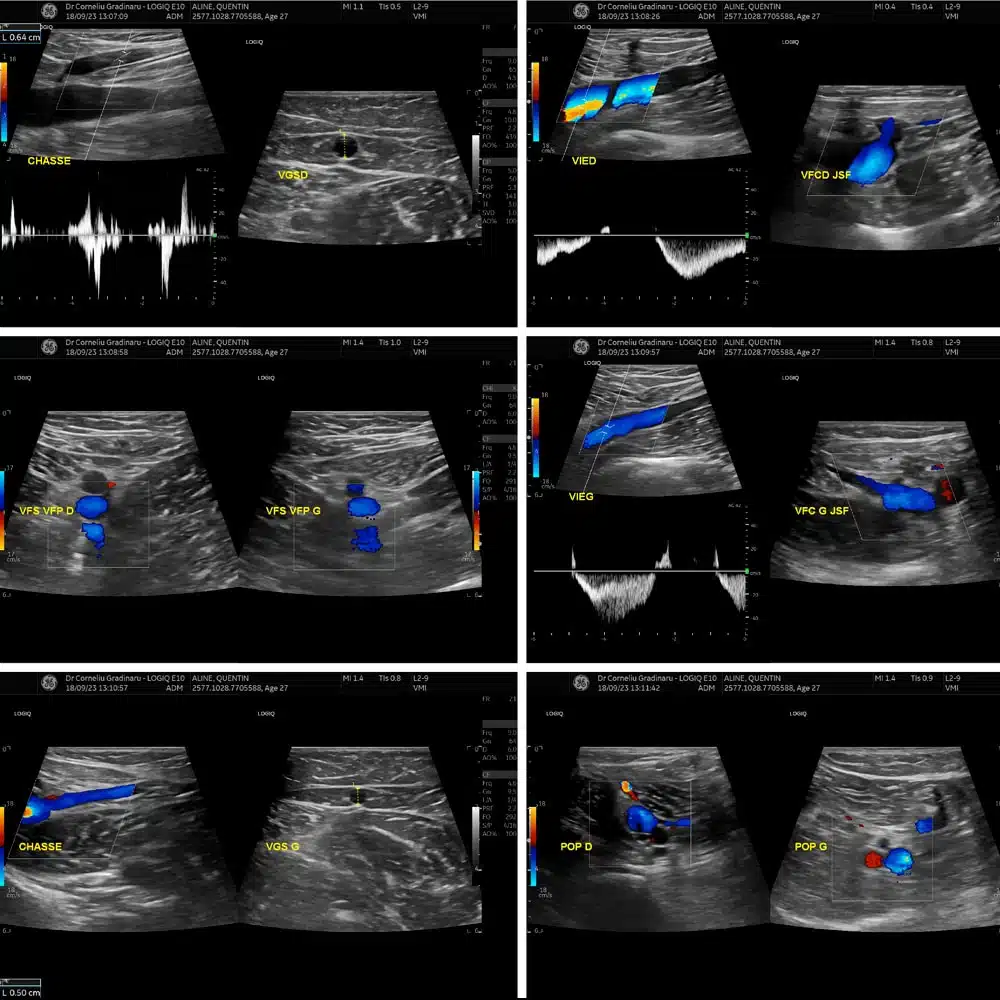
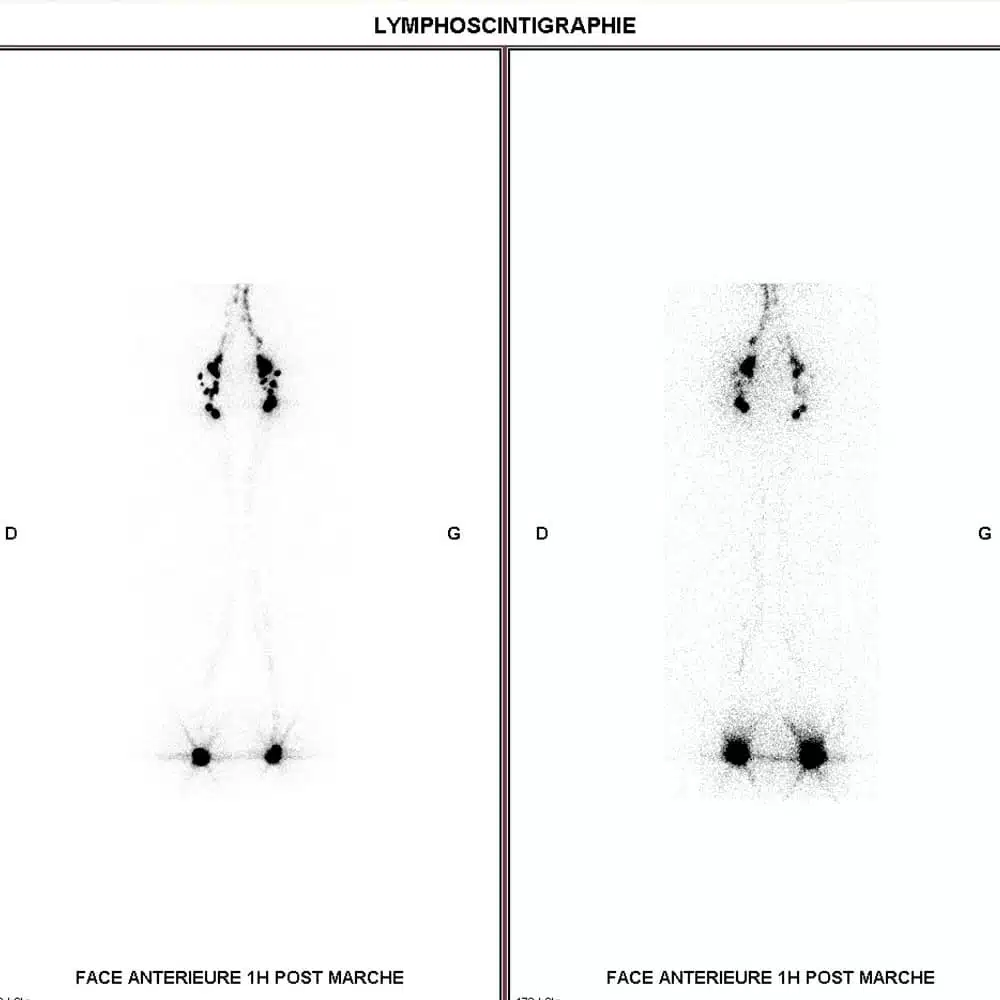
These medical imaging tests allow us to identify the specific characteristics of lipedema, such as abnormal fat accumulation beneath the skin and abnormalities in the lymphatic and venous systems.
However, it is important to note that diagnosing lipedema also involves ruling out other conditions with similar symptoms. Therefore, our medical team carefully reviews the results of imaging tests and considers other clinical factors to distinguish lipedema from other conditions.
Thanks to these precise diagnostic tools and our comprehensive approach, we are able to confirm or rule out a diagnosis of lipedema, ensuring that our patients receive care tailored to their needs—whether that involves confirming lipedema or investigating other causes of their symptoms.
Confirmation of the diagnosis:Once all the information has been gathered and analyzed, we proceed to confirm the diagnosis, whether it is positive for lipedema or indicates that the patient does not have the condition. This step is crucial because it allows us to develop a personalized treatment plan tailored to the patient’s specific needs and to finally put a name to their suffering, whether it is lipedema or not.
We understand the importance of providing accurate answers and ensuring that our patients receive the care best suited to their individual circumstances. If the diagnosis turns out to be negative for lipedema, our medical team will work closely with the patient to explore other treatment options or possible causes of her symptoms.
Our primary goal is to ensure that every patient receives an accurate diagnosis and the best possible care for her health and well-being.
Prevention of lipedema
Preventing lipedema is a key part of our commitment to our patients.
Although lipedema is a condition that often has a genetic component, there are steps our patients can take to slow the progression of the condition, improve their quality of life, and prevent their condition from worsening.
These tips are also intended for those who do not wish to or cannot undergo surgery. Here’s how we approach prevention:
Lifestyle adjustments: We work closely with our patients to identify lifestyle adjustments that may be beneficial.
This may include reducing sedentary behavior, managing stress, and promoting quality sleep. Our psychologists are also available to help our patients cope with the emotional challenges associated with lipedema. They can provide essential support for managing stress, anxiety, and body image issues, thereby helping to improve our patients’ mental and emotional well-being.
In addition to the physical pain caused by lipedema, patients often experience psychological distress, largely due to a lack of awareness about this condition.
In addition, it is crucial to note that our team of professionals can advise our patients on how to maintain optimal posture and mobility to prevent worsening lymphatic stagnation and fluid retention. Avoiding standing or sitting for long periods of time is particularly important, and our experts can provide specific recommendations to help our patients proactively manage their condition.
Nutritional advice: A balanced diet is key to preventing lipedema. At Lipoedème France, our nutritionists and dietitians work closely with our patients to provide nutritional advice tailored to their needs.
These guidelines include recommendations such as reducing intake of salt, sugar, and processed foods, as well as promoting a diet rich in fruits, vegetables, and lean proteins.
Balanced diet
Appropriate exercises: Physical activity plays a crucial role in preventing lipedema. At Lipoedème France, we provide guidance on exercises tailored to each patient’s condition.
These targeted exercises can help stimulate blood and lymphatic circulation, reduce inflammation, and promote better weight management.
In some cases, it may be necessary to consult a personal trainer to develop a customized exercise program, thereby ensuring that physical activity is performed properly and safely.
Compression: In some cases, the use of compression garments may be recommended to help reduce swelling and improve lymphatic circulation. Our experts assess the need for this preventive measure and recommend the appropriate products. We work with renowned brands such as Lipoelastic, Juzo, and Jobst to ensure that our patients receive high-quality compression products.
It is important to note that there are two types of compression: graduated compression, which applies uniform pressure to the leg, and sequential compression, which uses varying levels of pressure to promote lymphatic circulation. The choice will depend on each patient’s individual needs.
Education and Awareness: Education is a key component of our approach. We work with our patients to inform them about their condition, help them understand the risk factors, and teach them how to monitor for early signs of lipedema progression. A thorough understanding of the condition is a powerful tool in prevention.
To support these educational and awareness efforts, we maintain an informative blog, active social media accounts, and a regularly updated website. We strive to stay at the forefront of medical and scientific innovations related to lipedema so that we can share the latest developments with our patients.
We believe that access to up-to-date information is essential to helping our patients make informed decisions about their health and well-being.
French Lipoedema Association
Preventing lipedema is not just a short-term strategy, but rather a long-term commitment to the health and well-being of our patients.
Through lifestyle changes, a tailored diet, targeted exercises, and ongoing education, our patients are better equipped to manage their condition and prevent or slow its progression.
In addition, Clinique Lipoedeme France works closely with leading lipoedema specialists, including renowned physical therapists, top-tier angiologists, and general practitioners with expertise in this field. It is also establishing a comprehensive database listing lipedema specialists by region, thanks to its strong connections within the medical community in France.
This awareness campaign aims to improve recognition of lipedema and ensure that our patients receive the best possible support from the entire medical community.