
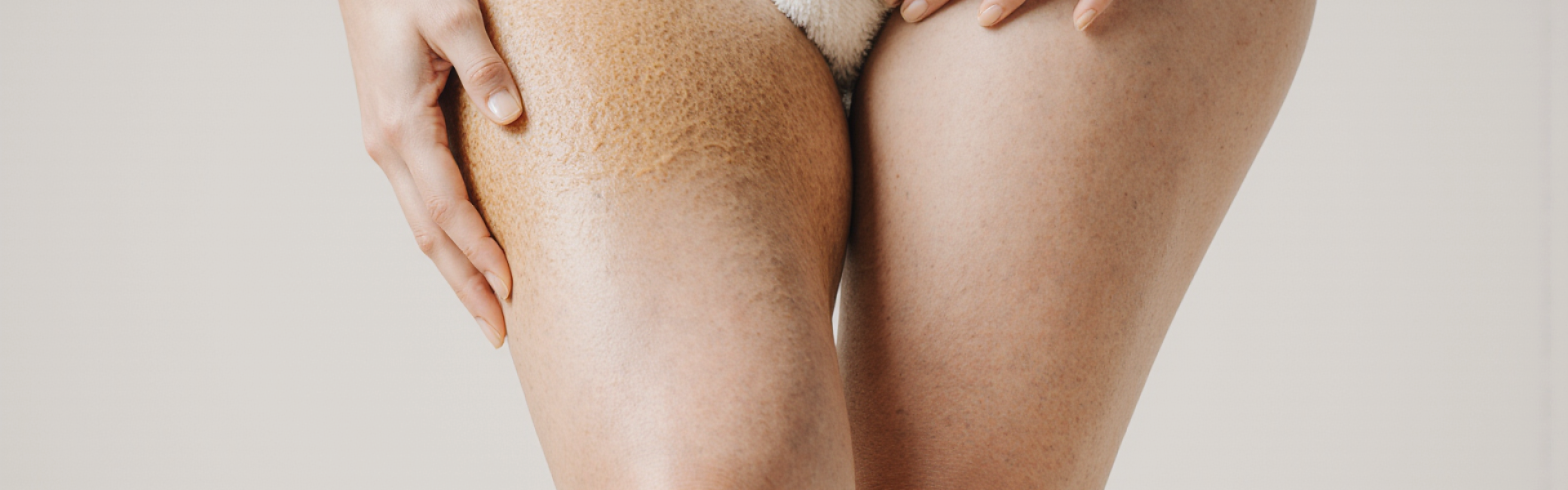
How much fat will liposuction remove?
Liposuction is a surgical procedure that uses a suction device to remove excess body fat. It is generally performed to smooth and reshape an area of the body.
Liposuction has undergone rapid development since the 1970s, when it was first experimented with by Dr. G. Fischer, a gynecologist from Rome, Italy. He went on to found the International Academy of Aesthetic Surgery.
In 1978, two French surgeons, Dr. Illouz and Dr. Fournier, began using and developing liposuction techniques. They were the first to perform liposuction for purely cosmetic purposes.
Liposuction techniques are evolving over time, and liposuction surgery remains the most effective medical method for removing excess fat and reshaping your body contours. My readers have read my other articles discussing liposuction techniques. At the same time, you can find videos on mysocial mediaaccounts that highlight the differences between the latest techniques.
It should be mentioned that liposuction (especiallyWAL liposuction) is considered the most effective treatment for lipedema, apart from conservative treatments such as pressotherapy and compression therapy, etc.
Regardless of how technology evolves today, one question remains among the most frequently asked:
“How much fat can be removed during liposuction?”
First and foremost, it is important to distinguish between the pure fat that will be removed from the patient and the total volume aspirated that we see in the operating room and that ends up in the aspiration bottles.
In the suction bottles, you ultimately have a difference in sedimentation between the volume of water at the bottom of the jar and the fat that floats on top, being lighter.
So what ultimately matters is calculating the volume of fat that remains, which represents the actual volume of fat that has been removed.
The bottom of the suction jar will represent water and blood. The problem lies in the blood that will be removed. Ultimately, the limit on removal is blood, because there is no limit on the volume of pure fat that can be removed.
So we must answer the question: how much fat can liposuction remove? Liposuction can remove as much fat as possible while taking care not to remove too much blood.
This is where all the surgeon's work comes in. During the operation, they must take care to remove as little blood as possible in order to remove as much fat as possible. However, it must be said that what really matters is not the amount of fat removed, but rather the volume and silhouette left for the patient.
The important thing is to see what shape results from the liposuction, so you shouldn't focus on volume, as if you had to perform some kind of feat. As if you had to do as much as possible.The important thing is to give shape and a nice volume to the body that has been suctioned.
Another related question:
“Are the results of liposuction permanent? Do fat cells reappear after liposuction?”
The human body has a supply of fat cells, or adipocytes (the medical term), which is fixed at puberty. From puberty onwards, the supply of cells does not change, so we refer to a stable number of fat cells.
It has long been known that fat cells are not cells that reproduce or multiply. Adipocytes are cells that grow larger, increase in volume, and become hypertrophied.
There is no cell multiplication among adipocytes. Since liposuction is a technique that removes a certain amount of fat volume, and therefore a certain number of adipocytes, we can say that liposuction empties a specific area in terms of fat storage. Since fat cells do not reproduce, the area that has been suctioned cannot be repopulated with fat cells.
Of course, the remaining fat cells can grow again... An area is never completely emptied by liposuction, and the remaining fat cells can continue to grow and hypertrophy in the event of excess weight or weight gain.
Of course, in cosmetic surgery and after any liposuction procedure, weight stability is extremely important... So a balanced diet is essential for anyone undergoing liposuction.
Thus, all liposuction removes fat cells from the targeted areas without the possibility of fat returning to the area.
Now, the importance of the plastic surgeon's work is to focus on the targeted areas using the right technique. For the patient, this means choosing the most experienced surgeon possible so that they can do the best job with the minimum amount of liposuction.
When we talk about fat cells being sucked out of an area, what we want is for the area to be emptied, but of course we have to be careful not to empty the area too much, since we know that fat cells do not reappear. Sometimes we can see the flaws of excessive liposuction; we are forced to put fat cells or fat back into areas that have been emptied too much. This seems senseless, since the goal was to remove fat from these areas.