
5 tips for better managing post-operative edema
Patients affected by lipedema and operated on byDr. Nicolas Zwillinger experience post-operative edema in their lower limbs. This swelling can take time to subside and sometimes causes stress for these women.
Although edema is a normal reaction, its resolution can be accelerated. For a detailed recovery protocol, I recommend consulting this comprehensive guide onseven proven solutions for reducing post-operative edema. In this article, we will take stock of this aspect of convalescence.
Definition of post-operative edema
Edema is the body's protective response to external aggression. In the case ofWAL liposuction, the aggression is caused by the back-and-forth movements made by the surgeon using theBody-jetsuction cannula throughout the procedure.
These edemas manifest as swelling in the interstitial tissues, caused by an accumulation of fluid (mostly water).
These swellings are present in the operated areas (lower or upper limbs), with more significant edema generally observed in the ankle and calf areas.
The volume of fat removed during surgical treatment of lipedema is temporarily replaced by edema. In some cases, the operated areas are larger than before the procedure, but there is no cause for concern.
Duration of post-operative edema
The body inevitably experiences post-operative swelling, but this will gradually subside and then disappear. We estimate that the swelling will peak between 3 and 10 days after the procedure.
The duration of post-operative edema varies greatly depending on the patient.
It can take a minimum of 6 weeks, on average 3 to 6 months, and it can take up to a year.
We sometimes observe an asymmetrical distribution of swelling in one limb compared to the other. There is no cause for concern; in some patients, we observe a slowing of the lymphatic system on the left or right limb, which explains this asymmetry.
This is one of the reasons whyDr. Nicolas Zwillingerrecommendslymphoscintigraphyof the lower or upper limbs prior to surgery in certain patients. This examination, performed innuclear medicine centers, can reveal a normal lymphatic system, unilateral or bilateral lymphatic slowing, or in some caseslymphedema.
Regardless of the outcome of this examination, it does not call the procedure into question, but it can nevertheless provide us with information about the postoperative period and the possibility of asymmetrical swelling or swelling that takes longer to subside in some patients.
How to help edema drain more quickly
Postoperative compression
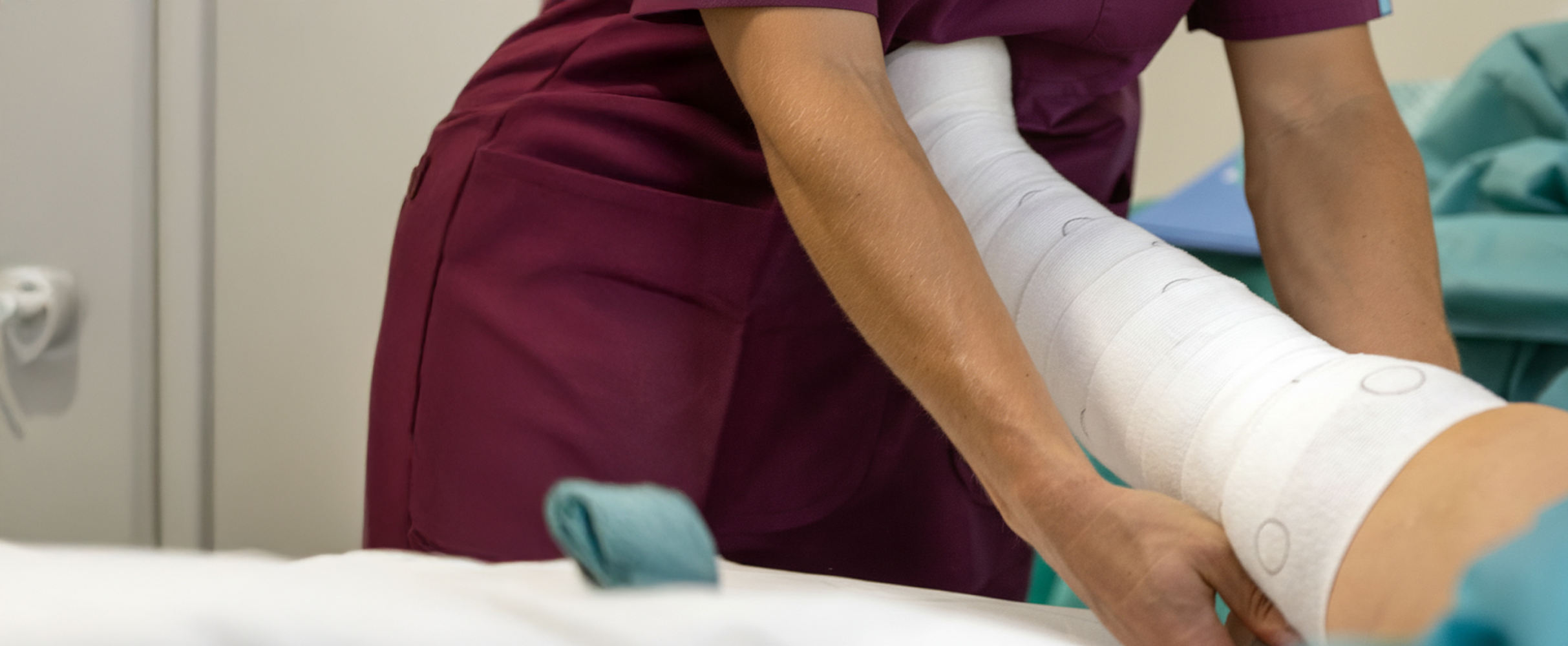
It is applied immediately after surgery, directly in the operating room, to limit the development of edema.
This compression should be maintained for the first few weeks/months after the procedure, then gradually reduced depending on how quickly the swelling subsides.
Here is the post-operative compression protocol recommended by Dr. Zwillinger and his team:
- Day 0 to Day 10:double compression (class 3 stockings or tights + BIFLEX compression bandages or LIPOELASTIC panty),day AND night
- D+10 to D+15 (ideally D+30 minimum):simple class 3 compression,day AND night
- D+15 or D+30 to D+60:simple class 3 restraint,day OR night
- D+60 to D+90:simple class 2 restraint,day OR night
In order to have the right compression from the day of the procedure, you need to take your measurements and order your compression garment before the operation. We also recommend ordering new stockings 2 to 3 weeks after the procedure with your new measurements. You must always ensure that your compression garment fits snugly.
The practice of manual lymphatic drainage
Lymphatic drainage is also highly recommended after surgery, as it helps to reduce post-operative swelling 7 to 10 days after the operation. Drainage sessions can be performed by physical therapists, beauticians, etc.
It is recommended to have two drainage sessions per week for a minimum of five weeks.
In some people, these drains may be left in place for several months.
The following drainage techniques may be used:
- Leduc
- Vodder
- Renata
It can sometimes be difficult to find a professional who practices these techniques, so we recommend undergoing pressotherapy sessions.
The cold
Applying cold to swollen areas can relieve pain and reduce post-operative swelling. This can be repeated several times a day over several weeks.
Physical activity
Walking will be possible from the day of the operation and is strongly recommended to allow for proper drainage of post-operative edema. Even if walking time is very limited during the first few days, it is advisable to walk regularly.
As you progress through your recovery, the walking time and distances covered will increase and the swelling will gradually subside. However, it is important not to overexert yourself during the first two weeks and to always listen to your body.
In a second stage (3 to 4 weeks after the operation), water sports will be possible. Movement in water helps to drain post-operative swelling, so we recommend swimming, aquabiking, aquajogging, or aquagym, always starting gently.
The weather
The most important factor in the disappearance of post-operative edema istime. Even if you follow all of our advice to the letter, the reduction in post-operative edema varies greatly from one patient to another. We invite you to be patient and allow your body time to recover from WAL liposuction surgery in the caseof lipedema treatment.